
Florida-based. On site at your plant or in an R&D lab.
Consulting and equipment selection
Consulting on extrusion processes and equipment, help with vendor selection and purchasing negotiations, and on-site project management for expansions, installations and start-ups.
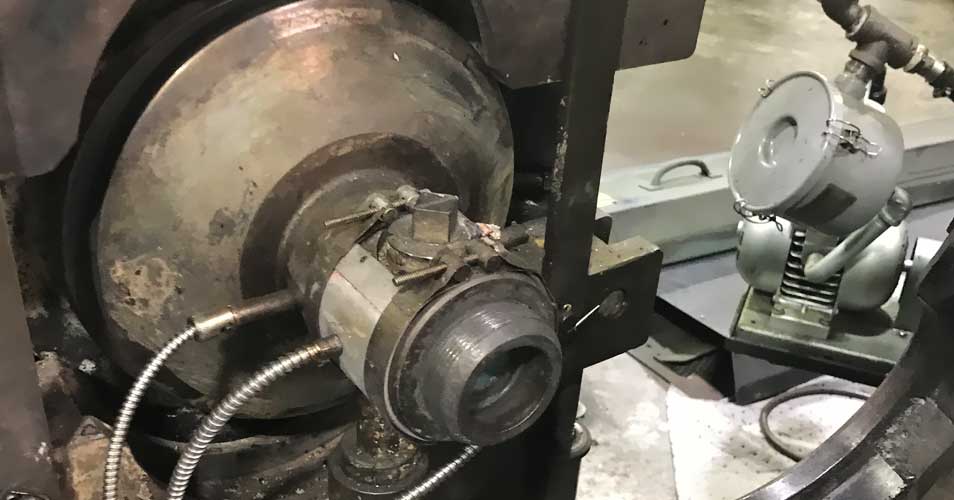
With continuous extrusion, success depends on far more than the extruder. Auxiliary equipment, tooling, raw materials, equipment condition, operating practices and the skill of the people running the process all shape productivity and quality.
A review of how the process is run today, what limits it and what can realistically change.
An assessment of the extruder, tooling and downstream equipment you already own, and of what condition it is in.
Matching extruder size, screw, tooling and downstream equipment to the products and volumes you need to make.
Help comparing suppliers and quotations, and support through purchasing negotiations.
On-site support for facility expansions, equipment procurement, major installations and start-up.
For owners and investors entering extrusion: what the product demands, what the equipment costs and what it takes to run it.
Published surveys put a number on what plants already know. Siemens estimates that unplanned downtime costs the world’s 500 biggest companies almost $1.4 trillion a year, about 11% of their revenues. An ABB survey of more than 3,200 plant maintenance leaders found a typical industrial business loses close to $125,000 for every hour it is down.
Most extrusion downtime traces back to something that could have been seen earlier: a worn screw, tooling that was never right for the material, a dryer that is not drying, a start-up practice that differs by shift.
Source: Siemens, The True Cost of Downtime 2024. Plants are improving, but every lost hour now costs more.
Findings are reported in plain language, with a status against each area so that priorities are obvious. The table below is an illustration of the format, not a real report.
| Area | What gets checked | Example finding | Status |
|---|---|---|---|
| Screw and barrel | Output against screw speed, melt temperature trend, black specks, surging, flight clearance where it can be measured | Output has fallen at the same screw speed and melt temperature has crept up, both signs of wear | Watch |
| Temperature control | Zone setpoints against actual readings, thermocouple condition, real melt temperature | Zones hold setpoint. Melt temperature is driven mainly by screw shear, as expected | In good order |
| Tooling | Tip and die selection, land length, draw-down ratio and draw balance for the material being run | Die gap and land length restrict the material. Tool set should be changed | Act |
| Feed and drying | Hopper feed stability, feed throat temperature, dryer dew point and residence time | Moisture-sensitive resin is under-dried on long runs | Act |
| Downstream | Cooling, sizing, puller or capstan control, gauging, take-up | Gauges are in place and trended, cooling is adequate for current line speed | In good order |
| Practice | Start-up, purge and changeover routines, and whether every shift follows the same ones | Start-up settings differ between shifts | Watch |
Equipment decisions are hard to reverse. GBET stays involved from the first specification to the first good product.
1
Materials, dimensions, tolerances, line speeds and volumes, and how they may change over the life of the line.
2
Extruder size and screw, tooling, cooling and sizing, gauging, pulling and take-up, matched to the product.
3
Vendor quotations compared on what matters for your product, with support through purchasing negotiations.
4
Project management on site, start-up of the line and training for the people who will run it.

Several of GBET’s recent customers have been entrepreneurs looking at wire and cable manufacturing for the first time. Before any equipment is ordered, due diligence answers the questions that decide whether the plan works.
Before the specification is fixed. It is far cheaper to change a screw design or a tooling choice on paper than after the line is installed. That said, plenty of work starts with a line that is already running badly.
Yes. Equipment evaluation covers the extruder, tooling and downstream equipment, and the practices used to run them. The aim is to separate what must be fixed from what can be managed as it is.
Yes. GBET assists with vendor selection and with purchasing negotiations, so that what you buy matches the product you need to make.
Yes. On-site project management covers facility expansions, equipment procurement and major installations, through to start-up.
The usual signs are falling output at the same screw speed, rising melt temperature, black specks and surging. One common rule of thumb puts the cut-off for replacing a screw at a flight clearance of about four times the original tolerance, depending on the resin.
Tell us what the line is doing, what it should be doing, and what cannot change. You will get a plain answer on whether training, tooling, equipment or process work is the right place to start.
We use cookies to improve your experience on our site. By using our site, you consent to cookies.
Manage your cookie preferences below:
Essential cookies enable basic functions and are necessary for the proper function of the website.
You can find more information in our Cookie Policy.