
Florida-based. On site at your plant or in an R&D lab.
Markets
Tolerances in thousandths of an inch, materials that each behave differently, and a line where a small change shows up at once on the gauge. GBET works on the process and the people who run it.
$12.9B
global medical tubing market in 2025
9.0%
forecast annual growth, 2026 to 2033
35.3%
of the 2025 market is in North America
$30.5B
global catheters market in 2025
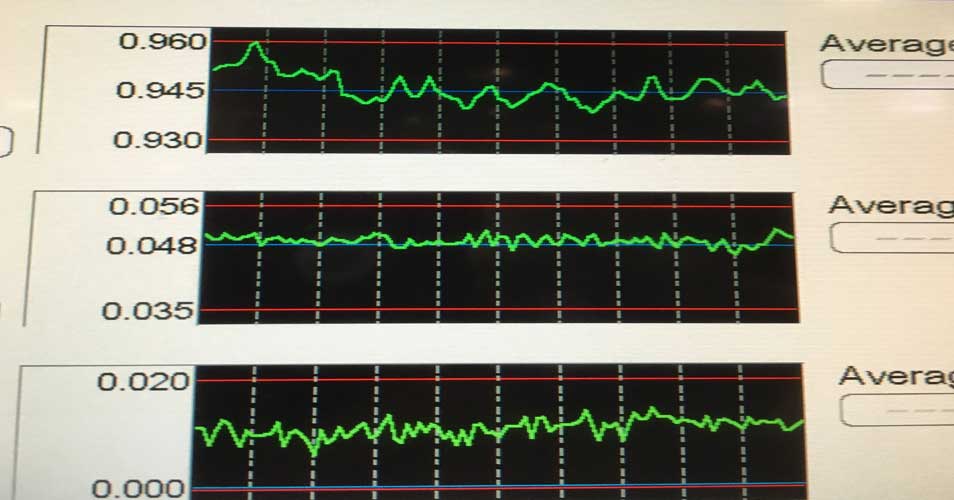
Microbore tubing can be as small as about 0.030 in. outside diameter, with walls of a few thousandths of an inch. A tube that size freezes almost as soon as it meets the water, so anything that disturbs it in the first inches of cooling shows up as ovality or wall variation.
Multi-lumen tubing adds more variables. The air pressure in each lumen, the puller speed and the water temperature together decide the outside diameter, the lumen sizes and the walls between them.
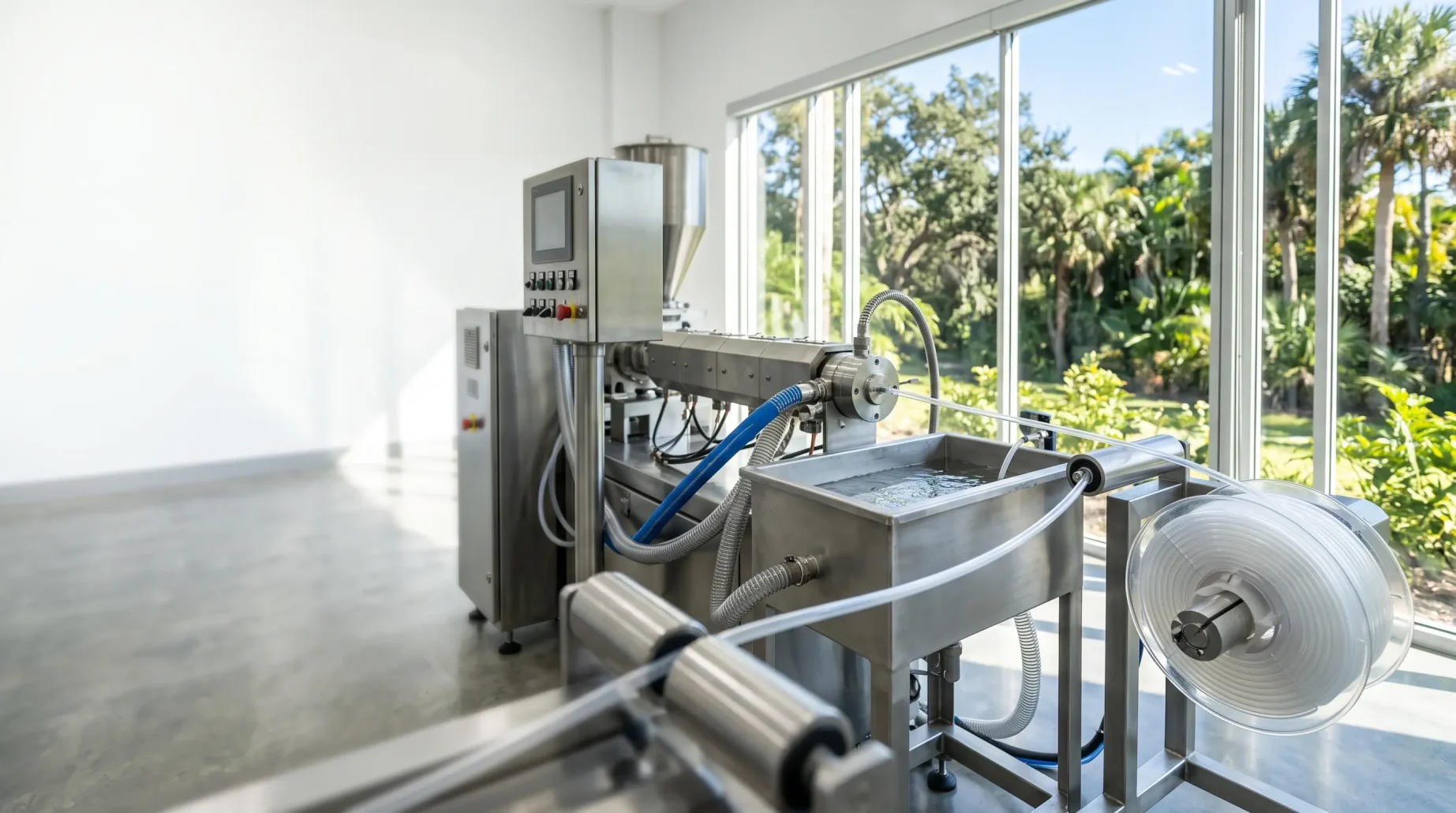
On a tubing line most dimensional problems start in one of three places: the feed, the first section of cooling, or the puller.
| Symptom | Common causes | Where to look first |
|---|---|---|
| Diameter or wall drifting | Surging at the extruder, unstable puller speed, changes in internal air pressure, water temperature swings | Feed and drying, puller and air regulation, tank temperature |
| Ovality | Uneven cooling, turbulence in the tank, sizing or support problems, tension | First section of the cooling tank, vacuum sizing set-up |
| Lumen size or position off | Air pressure to each lumen, tooling design, draw-down ratio and draw balance | Air control, tip and die geometry |
| Gels and specks | Degraded or contaminated material, hang-up points in the head, moisture | Drying, purge and shutdown practice, the flow path through the tooling |
| Rough or dull surface | Melt temperature, shear stress at the die, moisture | Die temperature and die gap, output rate, dryer performance |
| Layers not uniform | Viscosity mismatch between materials, melt temperature differences, tooling | Melt temperature of each stream, head design |
Hands-on training for operators and technicians on tubing lines: set-up, gauging, sizing and what each adjustment really changes.
Tip and die selection, draw-down ratio and draw balance chosen for the material and the dimensions.
Trials for new products and materials, at your plant or in an R&D lab, turned into a set-up operators can repeat.
Extruder size, sizing and cooling, gauging and pulling equipment matched to tight-tolerance tubing.
GBET does not provide regulatory or quality-system consulting. This summary is here because process decisions on a tubing line sit inside these rules.
| Framework | What it is |
|---|---|
| FDA QMSR (21 CFR Part 820) | The US quality system rule for device makers. Since February 2, 2026 it incorporates ISO 13485:2016 by reference |
| ISO 13485:2016 | Quality management system requirements for medical device manufacturers and their suppliers |
| ISO 10993 | Biological evaluation of medical devices. The sixth edition of Part 1 was published in November 2025 |
| USP Class VI | A biological reactivity classification for plastics, still widely quoted on material data sheets |
| EU MDR | The European regulation that applies to medical devices sold in the EU |
| Cleanrooms | Medical tubing is commonly extruded in ISO Class 7 or Class 8 cleanrooms |
Straight answers to the questions that come up most in this market.
It depends on the size, the material and the method. Tolerances of about a thousandth of an inch are commonly discussed for small tubing, with tighter figures quoted for vacuum-sized product. The honest answer comes from a capability run on your line with your material.
Vacuum sizing holds the outside of the tube against a sizing tool as it cools, which helps dimensional control. Free extrusion relies on internal air pressure, draw-down and puller speed. Very small and multi-lumen tubes are often run with internal air. The choice depends on the product and the material.
Because air pressure, puller speed and water temperature act together. A small change in any one of them moves the outside diameter, the lumens and the walls between them. Check air regulation and puller stability first, then cooling, then tooling and draw-down.
The Quality Management System Regulation took effect on February 2, 2026 and brings 21 CFR Part 820 into line with ISO 13485:2016. For a tubing supplier the practical points are familiar ones: a controlled, documented process and people trained to run it. GBET works on the process and the training. Regulatory interpretation belongs with your quality and regulatory team.
Thermoplastic polyurethanes, nylons and polyether block amides, polyolefins, PVC and fluoropolymers such as FEP, with PEEK and other high-temperature materials at the demanding end. Each has its own drying, temperature and tooling requirements.
Yes. Product development is a regular part of the work: finding the combination of materials, tooling and settings in trials, then turning it into a set-up operators can repeat.
Service
Hands-on training on your tubing lines.
Learn more
Service
Tooling, flow analysis and product development.
Learn more
Market
Two to five layers in a single pass.
Learn more
Further reading and sources: Grand View Research, medical tubing market; MD+DI: vacuum sizing for microbore tubing; FDA: Quality Management System Regulation; ISO 10993-1; ISO 13485:2016.
Tell us what the line is doing, what it should be doing, and what cannot change. You will get a plain answer on whether training, tooling, equipment or process work is the right place to start.
We use cookies to improve your experience on our site. By using our site, you consent to cookies.
Manage your cookie preferences below:
Essential cookies enable basic functions and are necessary for the proper function of the website.
You can find more information in our Cookie Policy.