
Florida-based. On site at your plant or in an R&D lab.
Extrusion training
One-on-one, hands-on extrusion training at your plant or in an R&D lab, built around the products, materials and equipment your people run every day.
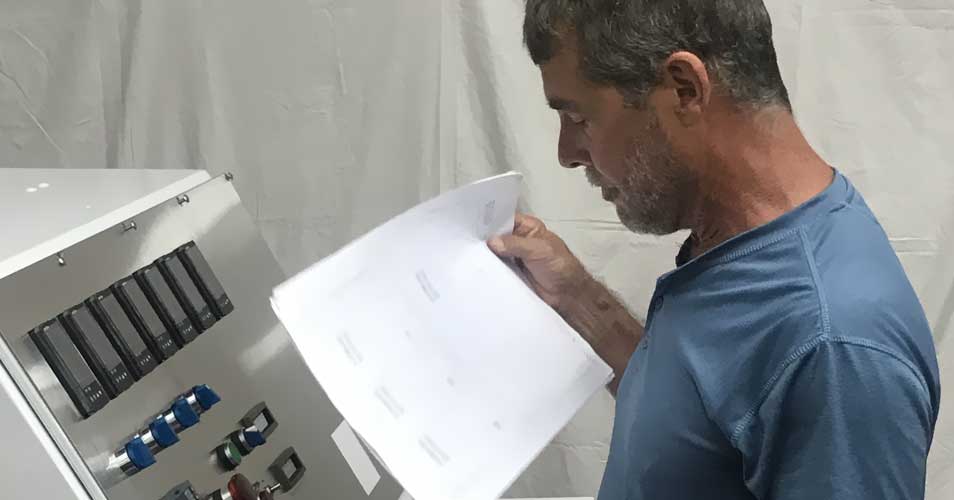
Technology has made production easier and machinery better. What is often missing is critical thinking: people who want to understand why the process behaves the way it does.
When things go wrong, and they will, the line gets running again because someone on the floor can work out what changed. Training is how a plant keeps that ability when its most experienced people retire or move on.
44.8
Median age of workers in US plastics and rubber products manufacturing, against 42.1 for all employed workers.
Training is scoped to the people in the room. Most programmes draw on one or more of these levels.
| Level | Who it is for | What it covers |
|---|---|---|
| Foundation Line operator fundamentals | New and developing operators | How the extruder, tooling and downstream equipment work together. Safe start-up and shutdown practice, purging and changeovers, drying moisture-sensitive resins, and what each control actually changes. |
| Diagnostic Set-up and troubleshooting | Experienced operators, set-up technicians, shift leads | Process set-up, wall thickness and concentricity, die centering, surface defects such as melt fracture, reading gauges and trends, and working from a symptom back to its cause. |
| Advanced Tooling and process engineering | Process engineers and technical leads | How polymers behave under shear, tip and die selection, draw-down ratio and draw balance, screw design basics such as L/D and compression ratio, sizing and cooling, and co-extrusion set-ups. |
A few days on site, focused on one product family or one recurring problem. A good first step.
A longer programme that takes a crew from fundamentals through troubleshooting, staggered so that every shift is covered.
Return visits and follow-up support, so that what was taught is still being practised months later.
Length and content are agreed after the first conversation. These formats are typical, not fixed.
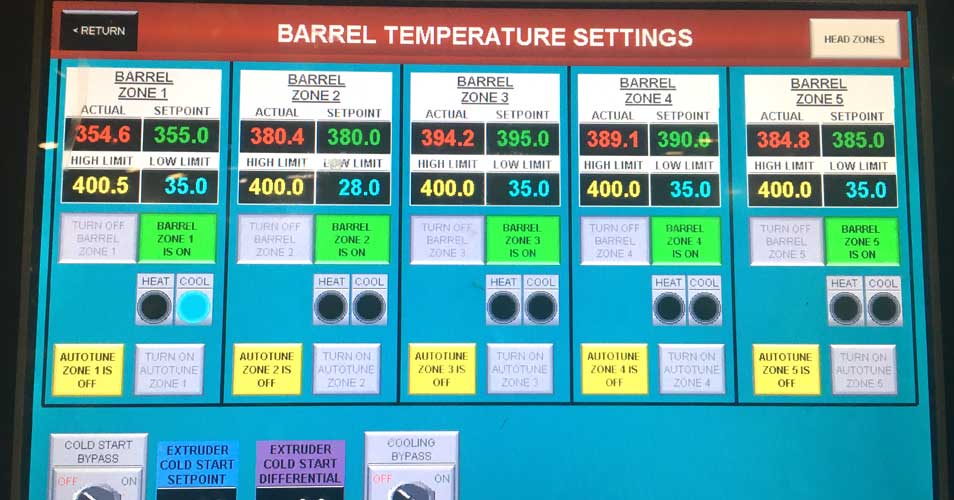
Each programme is built around your products, but the abilities it aims for are consistent.
It does not have to. Training is hands-on at the line, and sessions are planned with you around shifts and the production schedule. Much of it happens on live product.
No. From a half-inch extruder processing less than a pound an hour to 6 and 8 inch machines, the fundamentals are the same: extrusion is about managing a pump and optimising the system around it. Training is done on the equipment you have.
At your facility or in an R&D lab. Depending on the people involved, it usually works best on the plant floor.
That depends on the people and the products. A focused workshop takes a few days. A full programme for several crews takes longer and is usually staggered across shifts. The length is agreed after the first conversation.
Yes. Wire and cable and co-extruded and multilayer products such as tubing, conduit and coated substrates are GBET specialties, including set-ups with up to five layers.
GBET training is practical instruction, not a credential from an accrediting body. If you need a record of what each person covered for your own training files, say so when the programme is scoped.
Tell us what the line is doing, what it should be doing, and what cannot change. You will get a plain answer on whether training, tooling, equipment or process work is the right place to start.
We use cookies to improve your experience on our site. By using our site, you consent to cookies.
Manage your cookie preferences below:
Essential cookies enable basic functions and are necessary for the proper function of the website.
You can find more information in our Cookie Policy.